
Bone Grafting & Sinus Lifts for Dental Implants: Candidacy, Comfort & Recovery
December 19, 2025 9:00 amDental implants are one of the most successful and long‑lasting options for replacing missing teeth. But in some cases, the jawbone needs a bit of help before an implant can be placed — and that’s where bone grafting and sinus lifts come in. At Windmill Dental in Amarillo, TX, Dr. Austin A. Whetten helps patients understand when these procedures are needed, what to expect, and how the recovery process works.
If you’re considering dental implants but have questions about bone support or comfort, this guide is for you.
Why Bone Quality Matters for Implants
Dental implants rely on strong, healthy bone for stability. Unlike a bridge or denture, an implant is anchored directly in the jaw — much like a natural tooth root. For the implant to fuse securely with your bone, there must be enough bone volume and density in the area where the implant will go.
When bone has diminished — whether due to tooth loss, gum disease, infection, or prolonged denture use — there may not be enough structure to support an implant safely. Without sufficient bone, an implant can fail to integrate, become unstable, or place undue stress on surrounding teeth.
Bone grafting and sinus lift procedures help rebuild that foundation so that implants can be placed predictably and last for many years.
What is Bone Grafting?
Bone grafting is a procedure that adds bone (or bone‑like material) to areas of the jaw that have lost volume. The graft material can come from your own body, a donor source, or synthetic materials that stimulate your bone to grow.
The goal is to create enough density and height in the jaw so an implant can be set securely. Bone grafts are commonly used:
- In areas where a tooth has been missing for a long time
- After tooth extractions to preserve bone volume
- When gum disease has caused bone loss
- When prior trauma or infection has weakened the bone
Once a graft is placed, the body gradually integrates it over several months, developing new bone that’s strong enough to support an implant.
When a Sinus Lift is Needed
In the upper jaw near the back teeth, the sinus cavity sits close to where implants may need to be placed. After tooth loss in that area, the sinus can expand downward into the space where bone once was — leaving insufficient bone height for an implant.
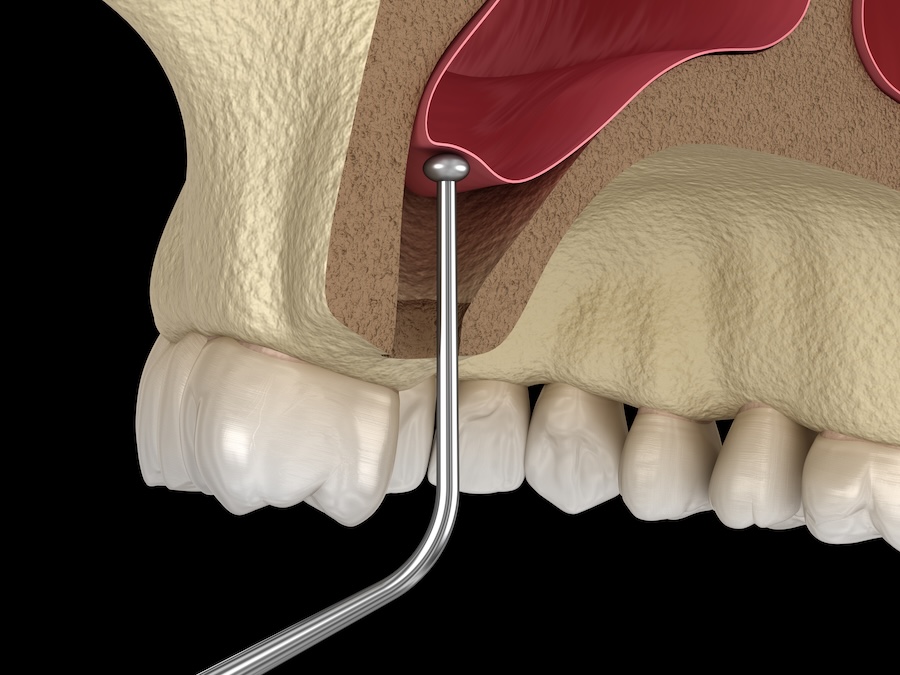
A sinus lift (or sinus augmentation) is a specialized type of bone grafting. During this procedure, the sinus membrane is gently lifted upward, and bone graft material is placed underneath to build up bone height. This creates a stable base for implants in the upper jaw that would otherwise be at risk of penetrating the sinus cavity.
Sinus lifts are common and effective for patients who want implant support in the back upper jaw — but don’t yet have the bone height needed.
Who is a Good Candidate?
Candidacy for bone grafting or a sinus lift starts with a thorough evaluation by Dr. Whetten. A combination of dental X‑rays, digital imaging, and clinical examination helps us assess:
- The amount and quality of your existing jawbone
- The health of your gums and supporting tissues
- Your overall oral health and medical history
- The location of your planned implants
Patients who maintain good overall health, have healthy gums, and are committed to healing are often good candidates. Even those with previous bone loss may be eligible after grafting. Smoking and certain medical conditions can affect healing, so these are discussed openly to help set realistic expectations.
What to Expect During the Procedures
Both bone grafting and sinus lifts are typically performed under local anesthesia, often with oral or IV sedation available for added comfort. You’ll be relaxed throughout the procedure, and we focus on making the experience as comfortable as possible.
For a bone graft, the graft material is placed into the deficient area of the jaw and secured. With a sinus lift, a small window is made in the bone near the sinus, the membrane is elevated gently, and graft material is placed to increase bone height.
These procedures are precise, gentle, and designed to support your long‑term implant success.
Comfort and Recovery
After the procedure, it’s normal to experience some swelling, tenderness, or mild discomfort — similar to other dental surgeries. Dr. Whetten and our team provide detailed aftercare instructions and pain management recommendations to keep you comfortable.
Most patients find that:
- Swelling peaks within 48–72 hours and then subsides
- Any discomfort can be managed with prescribed or over‑the‑counter medications
- Soft foods for a few days make eating easier
- Avoiding strenuous activity right after surgery supports healing
Healing time varies depending on the amount of grafting, but generally, it takes several months for new bone to mature sufficiently for implant placement. During this period, we monitor progress and schedule follow‑ups to ensure everything is developing as planned.
Bone Grafting and Sinus Lifts in Amarillo, TX
Bone grafting and sinus lifts may sound complex, but when indicated, they greatly increase the chances of implant success. Building a solid foundation before implant placement results in stronger support, better function, and long‑lasting results for your smile.
At Windmill Dental in Amarillo, TX, Dr. Austin A. Whetten works closely with every patient to explain the process, answer questions, and guide you through candidacy, comfort, and recovery — so you know exactly what to expect at each step.
If you’re considering dental implants and wonder whether bone grafting or a sinus lift might be part of your treatment plan, call our office today to schedule a consultation. Together, we can build a foundation for a healthy, confident smile that lasts a lifetime.
Categorized in: Bone Grafting, Dental Implants